
Fast repairs. Proven technology. Lasting results.
Seamless repairs
No joints, no edges, no weak points, no re-repairs.
Field-proven durability
Consistent results exceeding 3 years of service life.
Minimal disruptions
Road back in use faster than with the use of traditional methods with limited / no future reintervention, keeping the road open.
Sustainable by design
Less material, less energy, less waste, lower environmental impact.
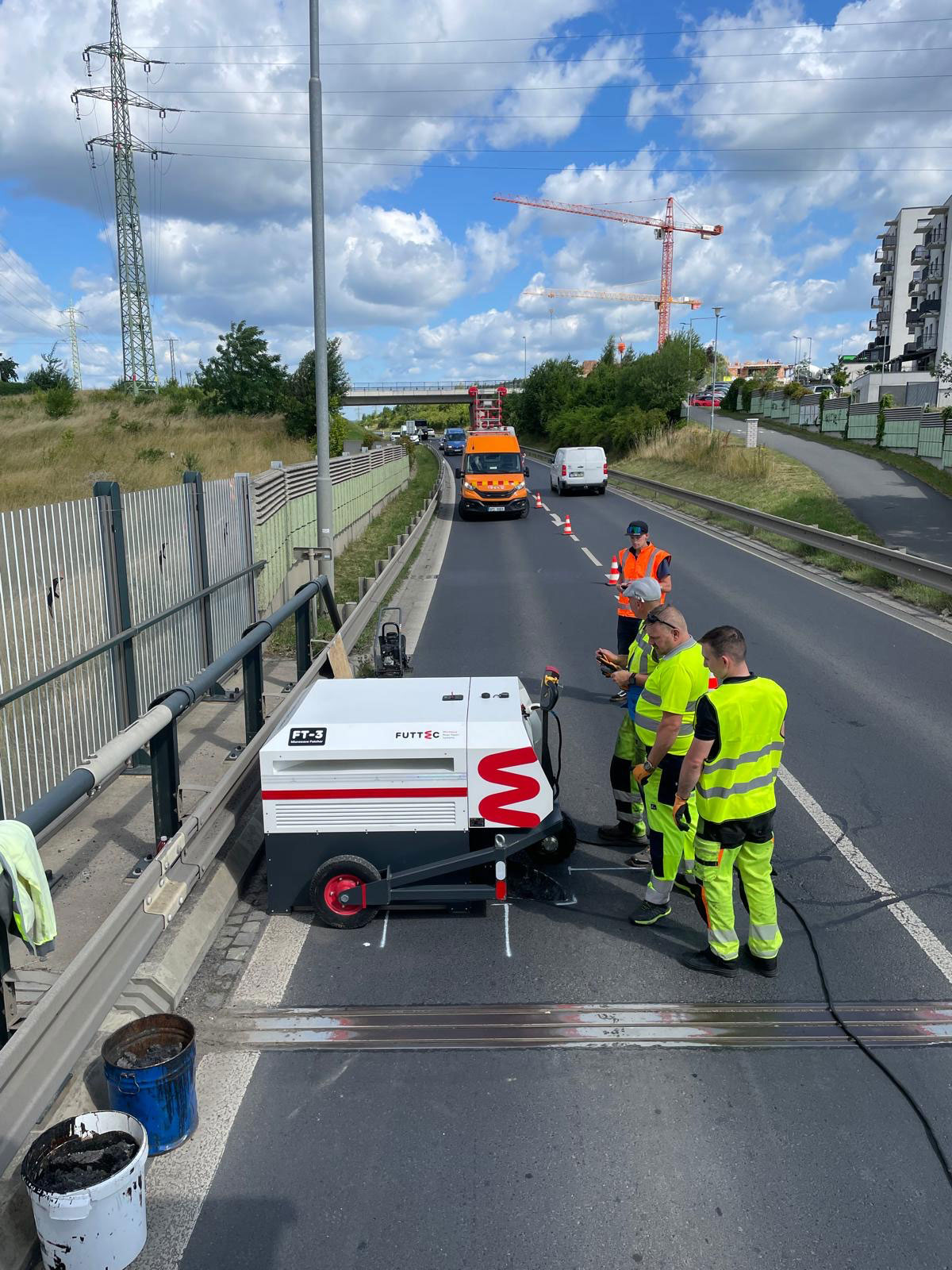
Permanent repair process.
Five tightly choreographed steps – preparation, two parallel heatings, hot-on-hot fill, and compaction. The pothole and the mix meet at the same temperature, so the new material fill bonds with the existing road instead of sitting on top of it.
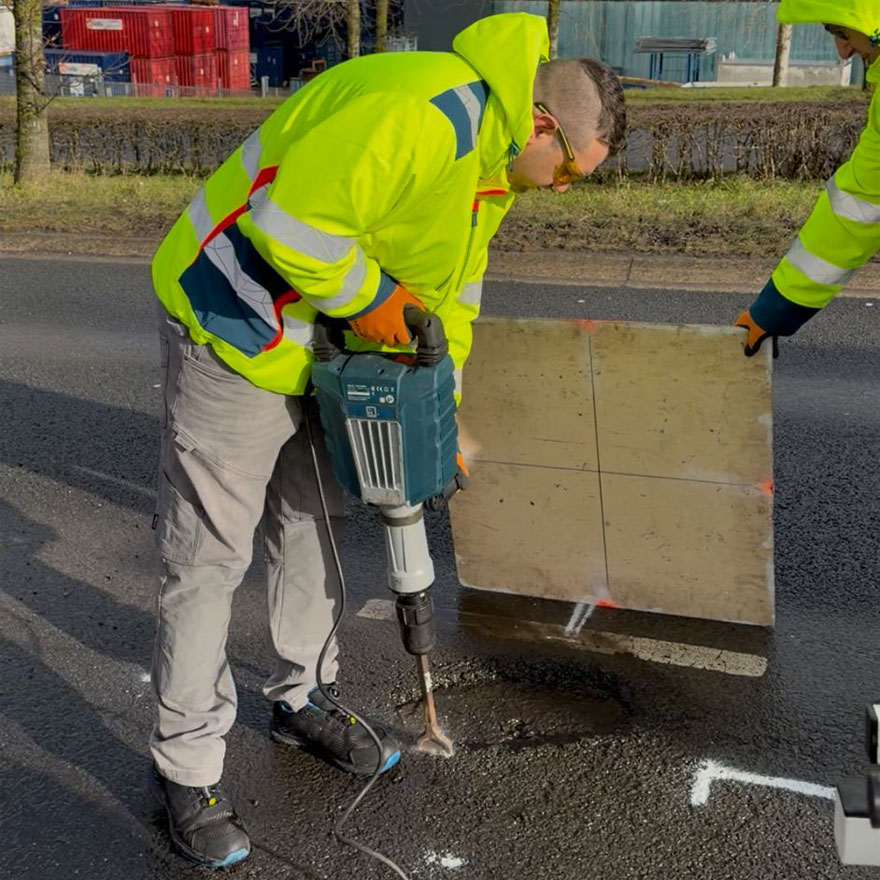
Preparation of the defect
The pothole is prepped with a jackhammer and cleaned before heating begins.
< 10 min
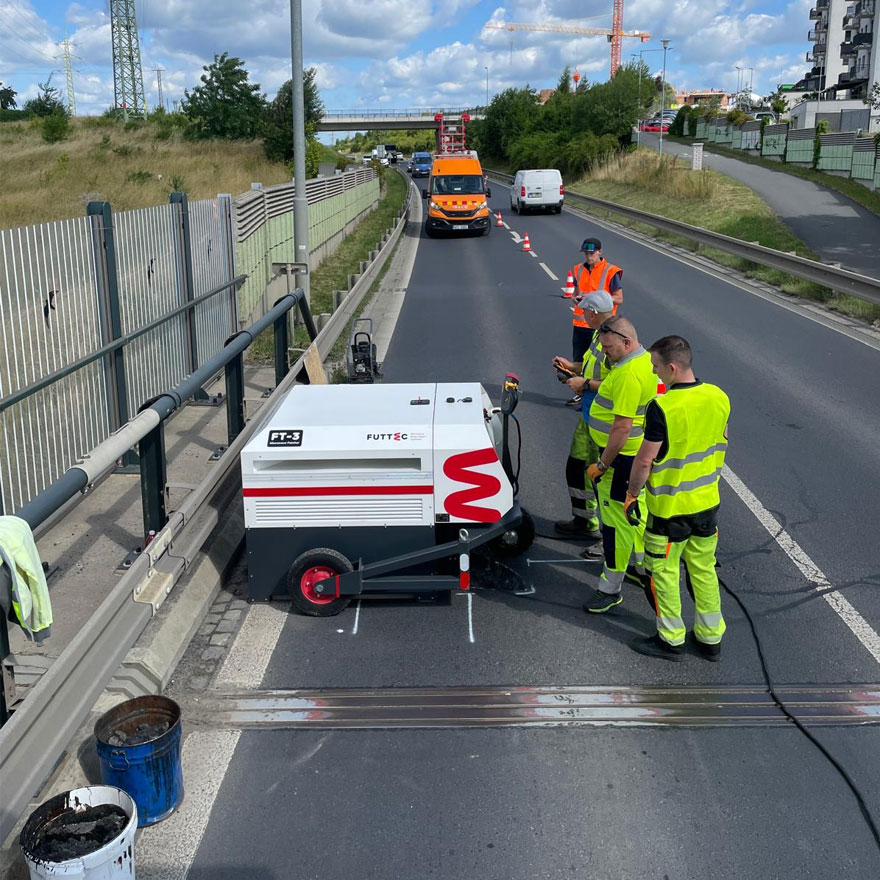
Heating with the patcher
The pothole is heated homogeneously across its full depth with the FUTTEC FT-3 patcher.
25 – 40 min
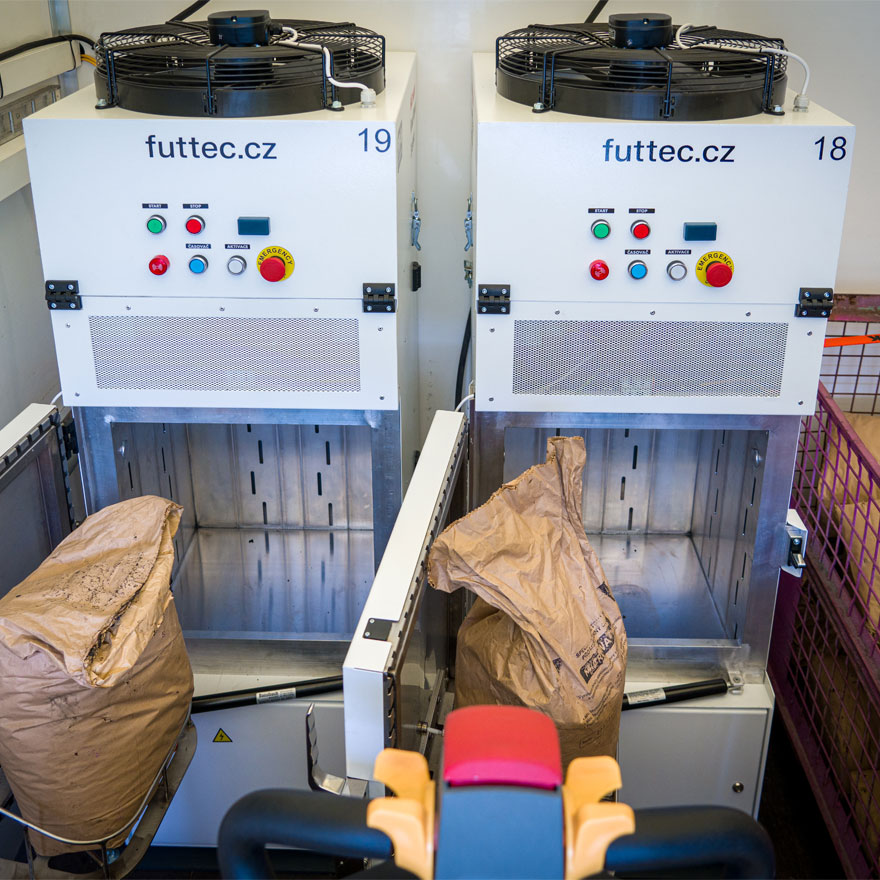
Mixture in the furnaces
The asphalt mix is similtaneously brought to temperature inside the truck-mounted furnaces.
9 – 10 min / bag
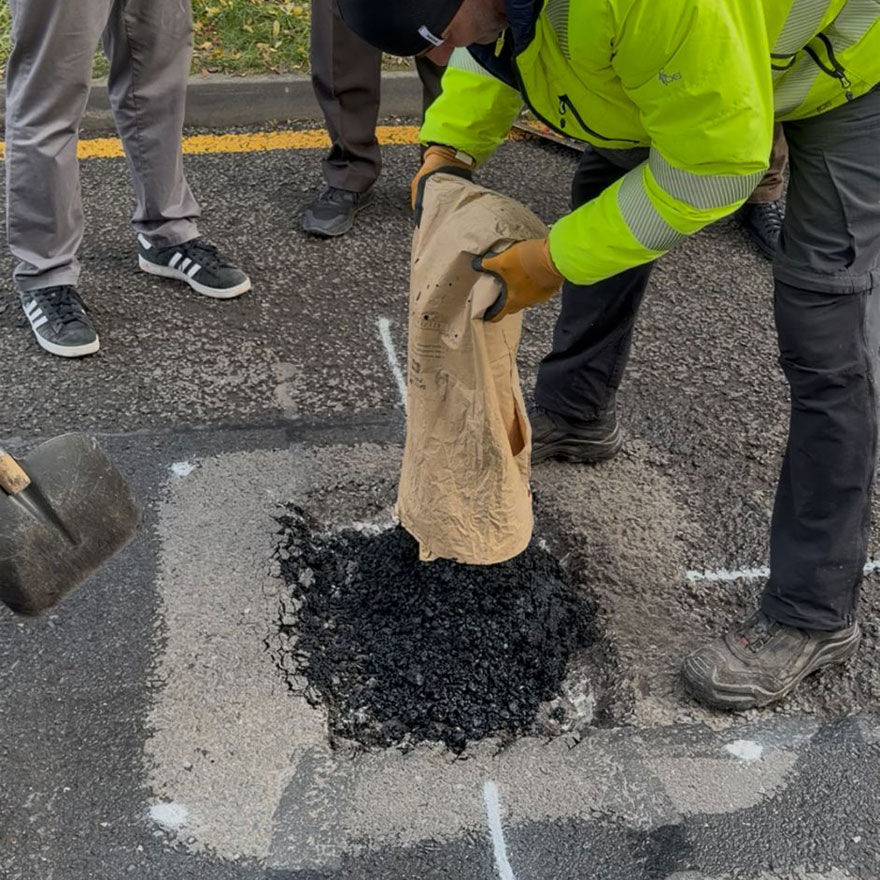
Hot asphalt into hot pothole
The pre-heated mix is poured directly from bags into the heated pothole.
Hot‑on‑hot bond
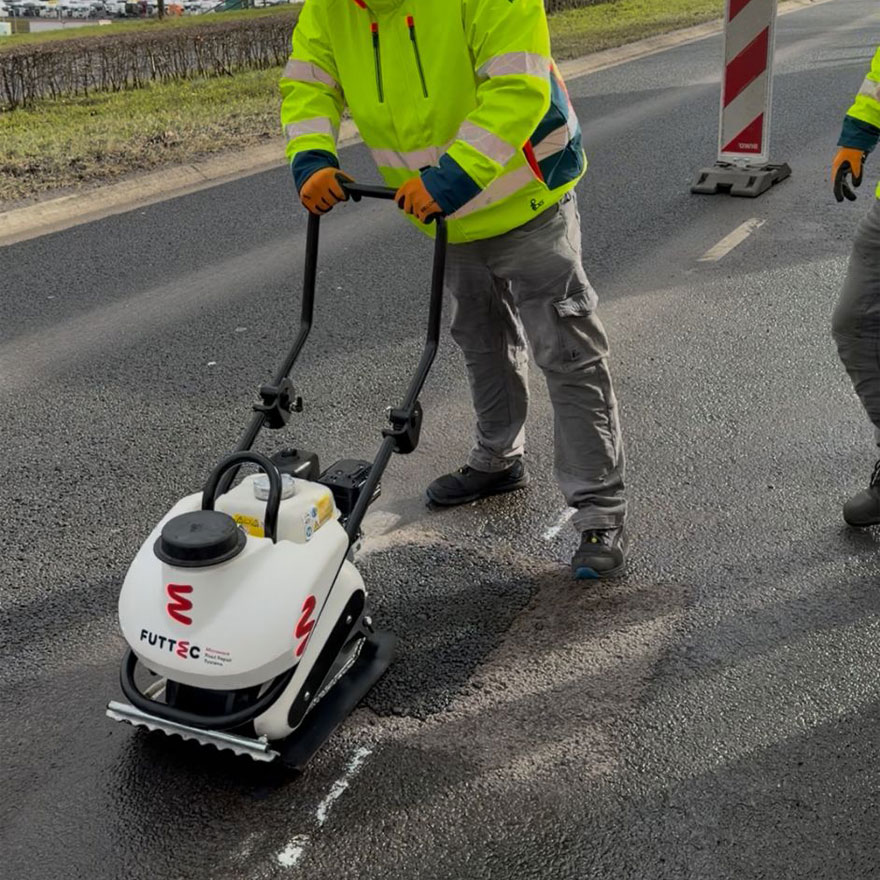
Finishing & compaction
Seamless bonding of the two hot materials is ensured by the final compaction.
< 10 min
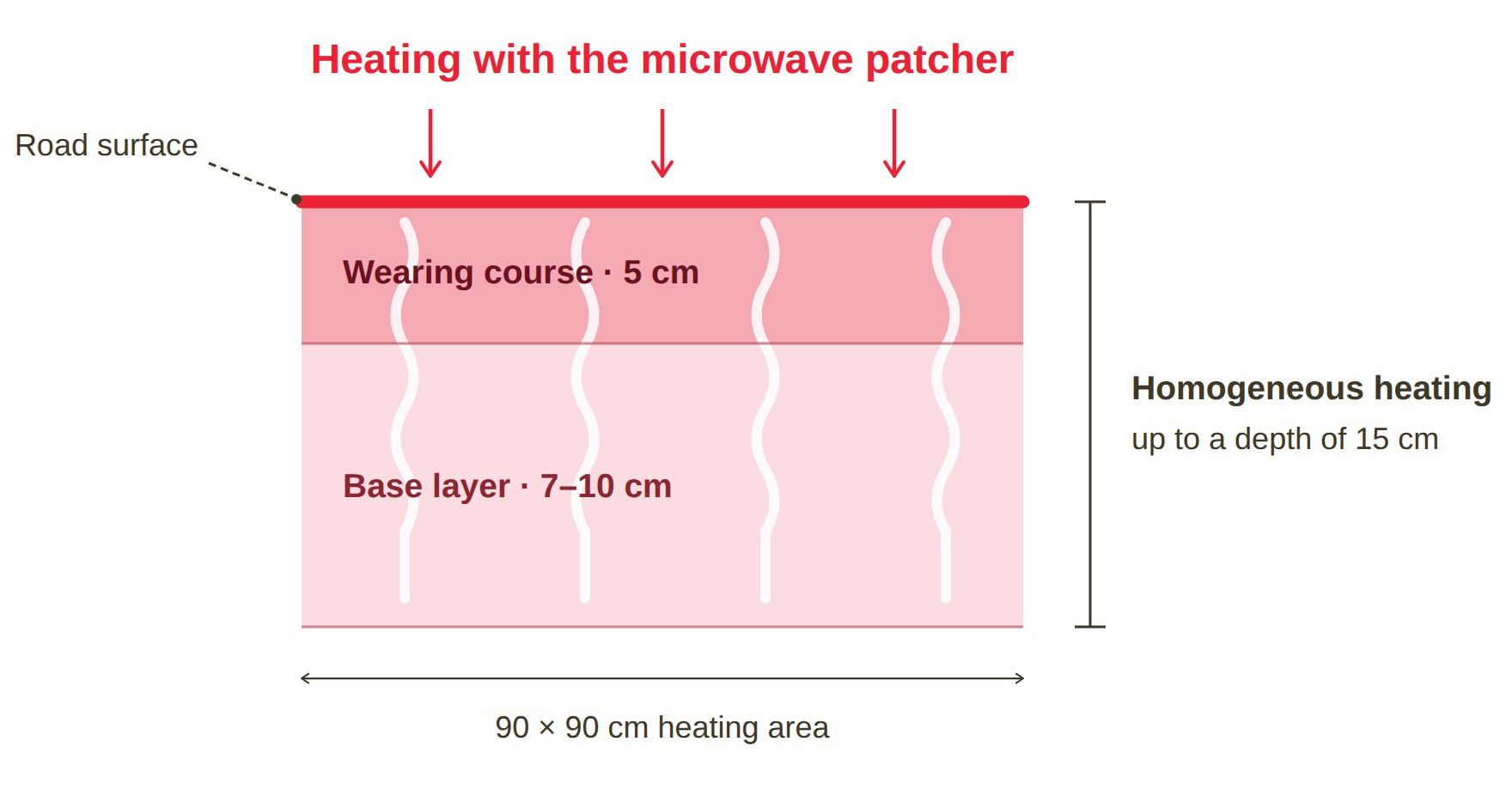
Homogeneous heating throughout the asphalt layer
The FT-3 microwave patcher delivers homogeneous heating across a 90 × 90 cm footprint, penetrating the full asphalt layer – wearing course, binding layer 10 cm at a time; this lets the new and existing material bond into one.
Frequently asked questions
The only technology enabling effective preventive maintenance due to seamless repairs. The innovative FUTTEC microwave system, which we developed in cooperation with the Institute of Chemical Processes of the Czech Academy of Sciences and Brno University of Technology, is already patented in seventeen countries of the EU and we are currently in the process of finalising our patents in seven other countries around the world, including the USA, Japan and South Korea.
In addition, in April 2023, the Ministry of Transport of the Czech Republic issued new technical conditions that recognize our technology as an official road maintenance procedure.
Today, microwaves have a wider use than just the familiar heating of food. The principle of our patent is microwave radiation with a frequency of 2,450 MHz, which can gently heat a mixture of asphalt and aggregate to a controlled temperature of 120 to 160°C. The asphalt binder at the border of the undamaged roadway and the impact will thus soften, but will not be damaged.
Then a dosed bitumen mixture corresponding to the damaged part of the road, which is also heated using microwaves, is added to the slurry and everything is compacted. The result is a perfect seamless and durable pothole repair that restores the road to its original condition. FUTTEC® has also created its own special packaged asphalt mixture that is best suited for this type of repair.
They work on a fundamentally different principle. Infrared heaters used in infrared repairs can irreversibly damage the asphalt binder around the pothole by heating it to several hundred degrees Celsius. The overheated asphalt binder releases toxic fumes that can endanger the health of workers and negatively affect the environment.
The heated area is then mechanically raked by road workers, filled with often inhomogeneous recycled material, poured with asphalt binder, consolidated and compacted.
At first everything looks good, but after a while the areas with insufficient asphalt binder succumb to erosion and the pothole re-emerges. Unlike the patented FUTTEC® microwave technology, infrared technology – although often used on roads to repair potholes – is not an officially recognised road maintenance procedure approved by the Ministry of Transport.
The repair of the pothole with microwave technology is seamless. During compaction, the replenished asphalt mixture naturally blends with the original roadway and thus closes the hole. There will be no leaky joint into which water can flow and further disrupt the road. Repairs with FUTTEC® technology therefore last much longer than repairs with other methods that use surface milling.
Repairing a pothole is quick, takes 30 minutes to 1 hour, and doesn’t require a road closure. This makes the whole process significantly cheaper and significantly increases the safety and flow of traffic: drivers do not have to stand in traffic jams and look for detours.
The released CO2 emissions are much lower than with other commonly used technologies. Moreover, during the repair itself, material is not unnecessarily removed from around the hole, which therefore does not need to be removed and disposed of. It is not necessary to close the road, so less traffic jams form and drivers don’t need to travel extra kilometers on detour routes.
Microwave repair is completely safe if technological procedures are followed for crew members who move in the immediate vicinity of the microwave emitter. Nor does it have any negative effect on the surroundings. Occupational safety and the impact on the surrounding environment have been thoroughly assessed by the relevant state testing authorities, and their approval is available to all interested parties.




We are members



Get in touch

